Buyers searching for 316L stainless steel filter mesh for chemical filtration usually need more than a catalog photo. The key question is whether the mesh can keep stable aperture, resist corrosion and fit the buyer's equipment without delaying production.
ANPING MAOYE supplies 304 and 316L woven stainless steel mesh for liquid filtration, process screens, discs and custom filter components. For chemical applications, 316L is often preferred because molybdenum improves corrosion resistance in chloride, acidic or humid environments.
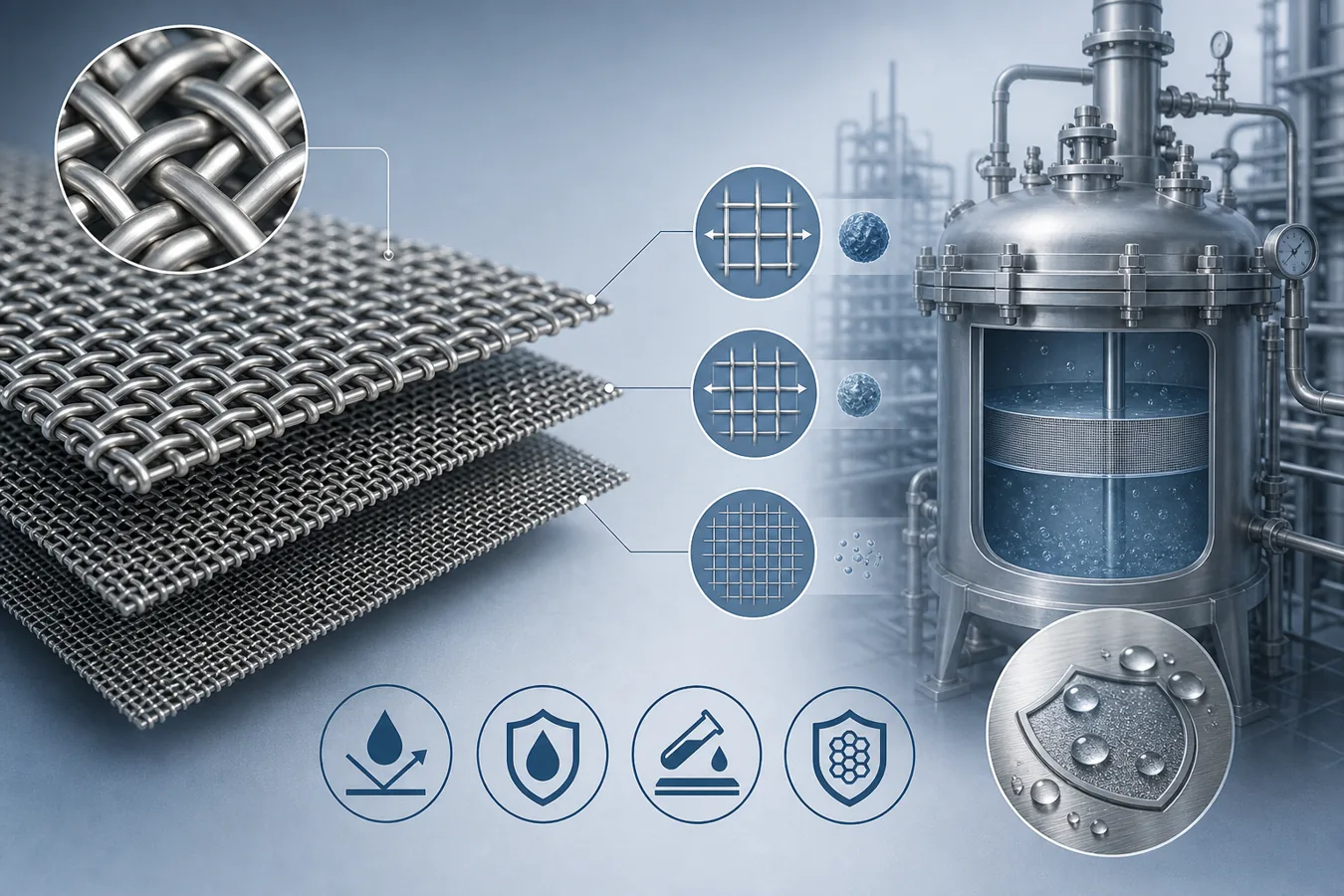
When 316L mesh is the safer choice
304 stainless steel mesh is suitable for many general filtration jobs, but 316L is usually selected when the filter will contact corrosive liquids, washdown chemicals, salt spray, humid production rooms or more demanding cleaning cycles.
| Application | Common mesh request | Buyer note |
|---|---|---|
| Chemical liquid filtration | 80 to 300 mesh | Confirm pH, temperature and cleaning method. |
| Solvent pre-filtration | 100 to 400 mesh | Ask for clean surface and roll protection. |
| Filter element support | 20 to 120 mesh | Check forming, welding or disc cutting needs. |
RFQ details that prevent wrong quotations
- Material grade: 316L or 304.
- Mesh count or micron rating, plus wire diameter if known.
- Roll width, roll length, sheet size or disc diameter.
- Filtration medium, operating temperature and cleaning process.
- Quantity, packing requirement and destination country.
If the buyer only provides micron rating, the factory should confirm actual aperture because mesh count, wire diameter and weave type all affect filtration performance.
Sample check before bulk order
For new chemical filtration projects, a small sample or trial batch helps verify aperture, surface condition, flatness and cutting tolerance before committing to bulk rolls or custom mesh parts.