For a fast factory quote, send material grade, mesh count or micron rating, wire diameter, size, quantity and application. ANPING MAOYE can help check whether 304 or 316L stainless steel mesh is more suitable.
Micron rating is only useful when the full mesh structure is clear
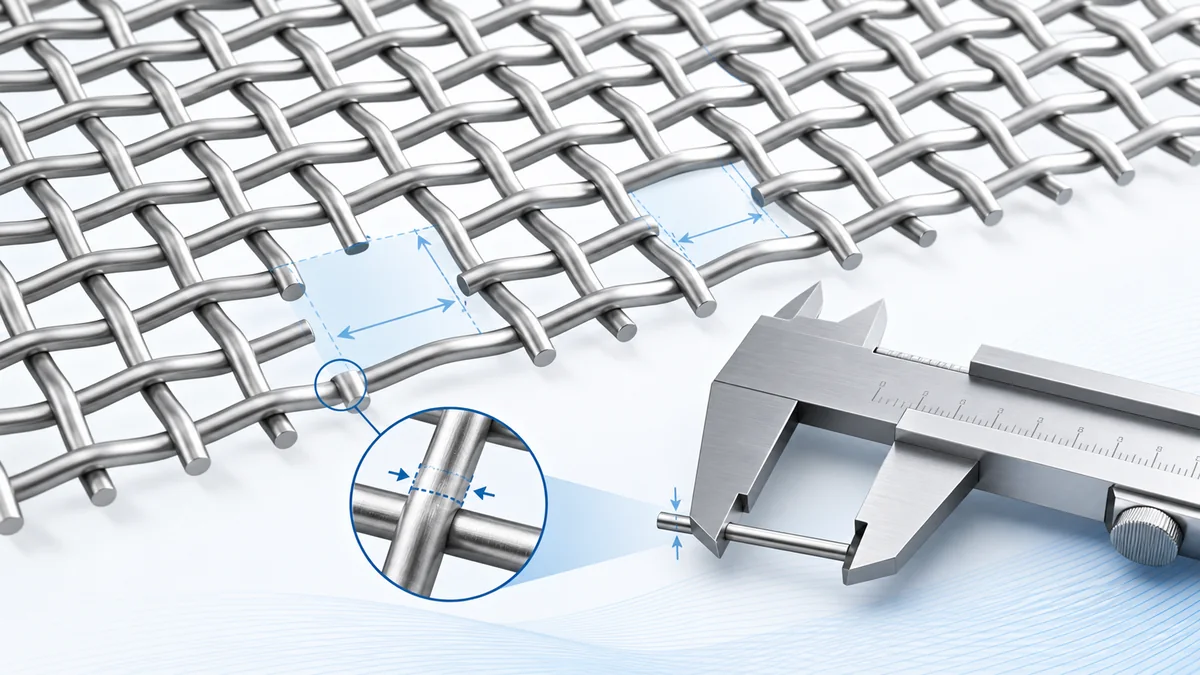
Many buyers search for 100 mesh to micron, 200 mesh to micron or mesh size to micron. These references are useful for early selection, but real filtration performance depends on wire diameter, weave type, open area and the material being filtered.
For liquid filtration, buyers should confirm both the target particle size and the acceptable flow rate or pressure drop.
Common liquid filtration use cases
- Water treatment pre-filtration and cartridge support mesh.
- Hydraulic oil and lubricant filtration support layers.
- Food and beverage liquid screening where 316L may be required.
- Chemical liquid filtration where corrosion resistance matters.
How to reduce quote mistakes
Use a mesh-to-micron chart as a starting point, then confirm the actual aperture with the factory. If an existing filter works well, sending a sample or photo can speed up matching.
Specification Table
| Buyer question | Recommended detail | Why it matters |
|---|---|---|
| Target filtration | Particle size in micron or current mesh count | Defines whether the mesh can retain the required particles |
| Flow condition | Liquid type, viscosity, pressure and temperature | Affects open area and wire diameter choice |
| Material | 304, 316 or 316L stainless steel | Controls corrosion resistance and food/chemical suitability |
| Cleaning method | Backwash, ultrasonic cleaning, solvent cleaning or replacement | Influences weave strength and service life |
Micron Rated Stainless Steel Mesh RFQ Notes for Serious Buyers
For liquid filtration, the most useful supplier page should answer practical purchasing questions instead of only describing the product. Buyers comparing micron-rated mesh should confirm material grade, mesh count or micron rating, wire diameter, aperture tolerance, product size, order quantity, application environment and delivery country before asking for a quote.
ANPING MAOYE can review drawings, samples or photos when the buyer needs custom stainless steel filter mesh parts. For repeat orders, keeping one approved specification sheet helps reduce mistakes in diameter, width, edge treatment, packing labels and shipment preparation.
How This Helps Quote Accuracy
A complete RFQ allows the factory to check whether 304, 316 or 316L stainless steel is more suitable, whether the mesh should be supplied as rolls, sheets, discs, cylinders or replacement screens, and whether the order needs trial samples before bulk production.
| Buyer detail | What to provide | Why it matters |
|---|---|---|
| Material | 304, 316 or 316L stainless steel | Controls corrosion resistance, weldability and cost. |
| Filtration target | Mesh count, micron rating, aperture or sample | Helps match flow rate and particle retention. |
| Product form | Roll, sheet, disc, cylinder, basket or OEM drawing | Determines cutting, forming, welding and packing. |
| Order plan | Sample, small batch, repeat order or annual demand | Helps quote realistic lead time and export packing. |
For faster communication, send the full specification through the inquiry form and mention the working liquid, temperature, cleaning method and whether the part will be reused or replaced regularly.
FAQ
Is mesh count the same as micron rating?
No. Mesh count is openings per inch. Micron rating depends on opening size, wire diameter and weave structure.
Which stainless steel grade is better for liquid filtration?
304 is used for many general liquids. 316L is preferred for food, chemical, chloride and corrosion-sensitive liquids.
Can ANPING MAOYE help convert mesh to micron?
Yes. Buyers can use the mesh to micron conversion chart and send the target filtration requirement for confirmation.