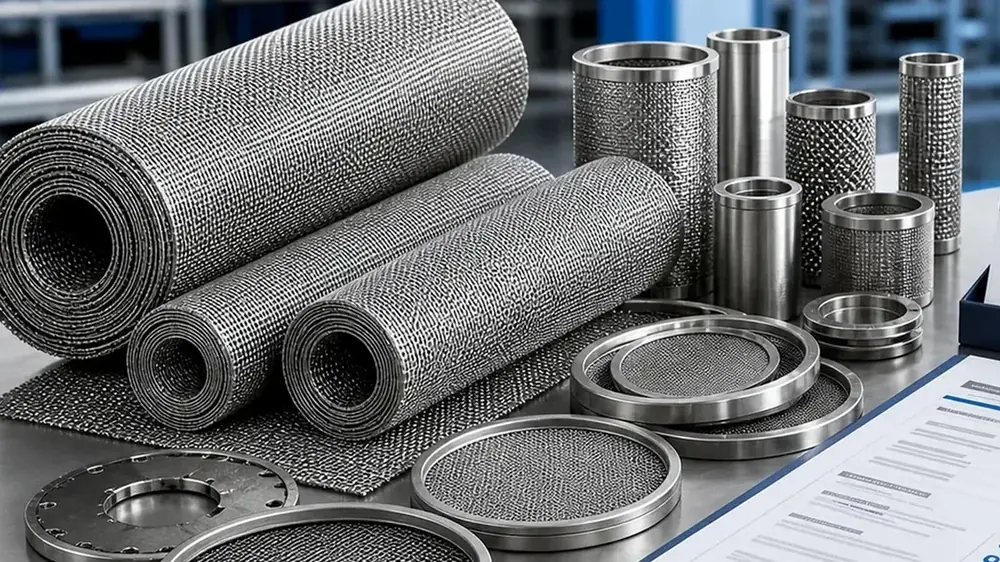
For OEM buyers, one approved sample is not enough. The real value comes from keeping every future batch close to the approved specification, especially when the mesh becomes part of a filter cartridge, screen pack or equipment assembly.
Why batch traceability matters
Traceability helps buyers identify which material, mesh count, wire diameter and production batch were used in each order. This is important when downstream equipment makers need repeatable filtration performance.
For large orders, lot control also helps separate different sizes, grades or cut shapes before export packing.
What information should be recorded
A useful batch label should include material grade, mesh count or micron target, wire diameter, width or part size, quantity, production date and order reference.
For custom parts, the drawing version and tolerance note should be kept with the order record.
How buyers can improve repeat order accuracy
Keep one approved sample, one final drawing and one written specification. When reordering, quote the previous order reference and describe any change clearly.
If the product is used in regulated or high-value equipment, request photos or inspection notes before shipment.
Procurement Table
| Control point | Recommended record | Buyer benefit |
|---|---|---|
| Material | 304, 316L or other grade | Avoids grade confusion |
| Opening | Mesh count plus wire diameter or micron target | Improves filtration consistency |
| Shape | Roll, sheet, disc, cylinder or basket | Reduces packing mistakes |
| Repeat order | Previous order reference and drawing version | Speeds up quotation and production |
Stainless Steel Mesh Batch Traceability RFQ Notes for Serious Buyers
For repeat OEM orders, the most useful supplier page should answer practical purchasing questions instead of only describing the product. Buyers comparing batch labels should confirm material grade, mesh count or micron rating, wire diameter, aperture tolerance, product size, order quantity, application environment and delivery country before asking for a quote.
ANPING MAOYE can review drawings, samples or photos when the buyer needs custom stainless steel filter mesh parts. For repeat orders, keeping one approved specification sheet helps reduce mistakes in diameter, width, edge treatment, packing labels and shipment preparation.
How This Helps Quote Accuracy
A complete RFQ allows the factory to check whether 304, 316 or 316L stainless steel is more suitable, whether the mesh should be supplied as rolls, sheets, discs, cylinders or replacement screens, and whether the order needs trial samples before bulk production.
| Buyer detail | What to provide | Why it matters |
|---|---|---|
| Material | 304, 316 or 316L stainless steel | Controls corrosion resistance, weldability and cost. |
| Filtration target | Mesh count, micron rating, aperture or sample | Helps match flow rate and particle retention. |
| Product form | Roll, sheet, disc, cylinder, basket or OEM drawing | Determines cutting, forming, welding and packing. |
| Order plan | Sample, small batch, repeat order or annual demand | Helps quote realistic lead time and export packing. |
For faster communication, send the full specification through the inquiry form and mention the working liquid, temperature, cleaning method and whether the part will be reused or replaced regularly.
A practical traceability system is also useful when a buyer has multiple factories or distributors receiving the same mesh part. The label and inspection record make it easier to compare future batches with the approved sample and reduce confusion during maintenance or replacement purchasing.
FAQ
Does stainless steel mesh need batch labels?
Batch labels are recommended for OEM and repeat industrial orders because they help buyers track material, size and production references.
What is the most important traceability detail?
Material grade, mesh count, wire diameter, size and order reference are the most useful details for repeat purchasing.
Can custom mesh parts be controlled by drawing version?
Yes. Drawing version control helps prevent confusion when buyers revise disc, cylinder, basket or welded mesh part dimensions.